OPC Classic
ISO/OSI Model
| 7 | Application Layer | OPC DA, AE, HD etc. | OPC DA XML |
| 6 | Presentation Layer | COM/DCOM (Distributed) Component Object Model | SOAP, XML |
| 5 | Session Layer | RPC Remote Procedure Calls | HTTP |
| 4 | Transport Layer | TCP/IP | |
| 3 | Network Layer | ||
| 2 | Link Layer | ||
| 1 | Physical Layer | ||
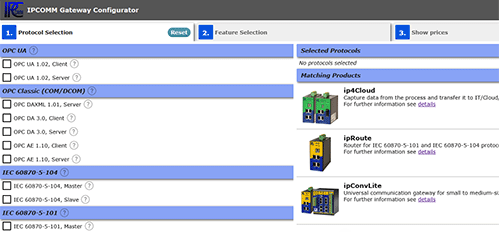
Available Protocol Stacks
Applicable Products
-
ipConvOPC
Windows software package for universal conversion between diverse standard protocols
-

ipConv/VM
Universal protocol conversion for VMware Workstation Pro, VMware ESXi and Microsoft Hyper-V
-

ipConv/Cloud
Software for universal protocol conversion in cloud environment and standard Linux distributions
-
ip4Cloud/SEC3PB
Capture PROFIBUS data by eavesdropping and transmit it to Cloud/IT or SCADA services
-
ip4Cloud/SEC3IO
Switch and monitor digital I/O states to transmit them to IT/Cloud/SCADA services
-
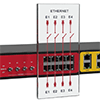
ipELB
4-Port Ethernet Line Breaker with relay controlled Ethernet ports and integrated I/O module

References